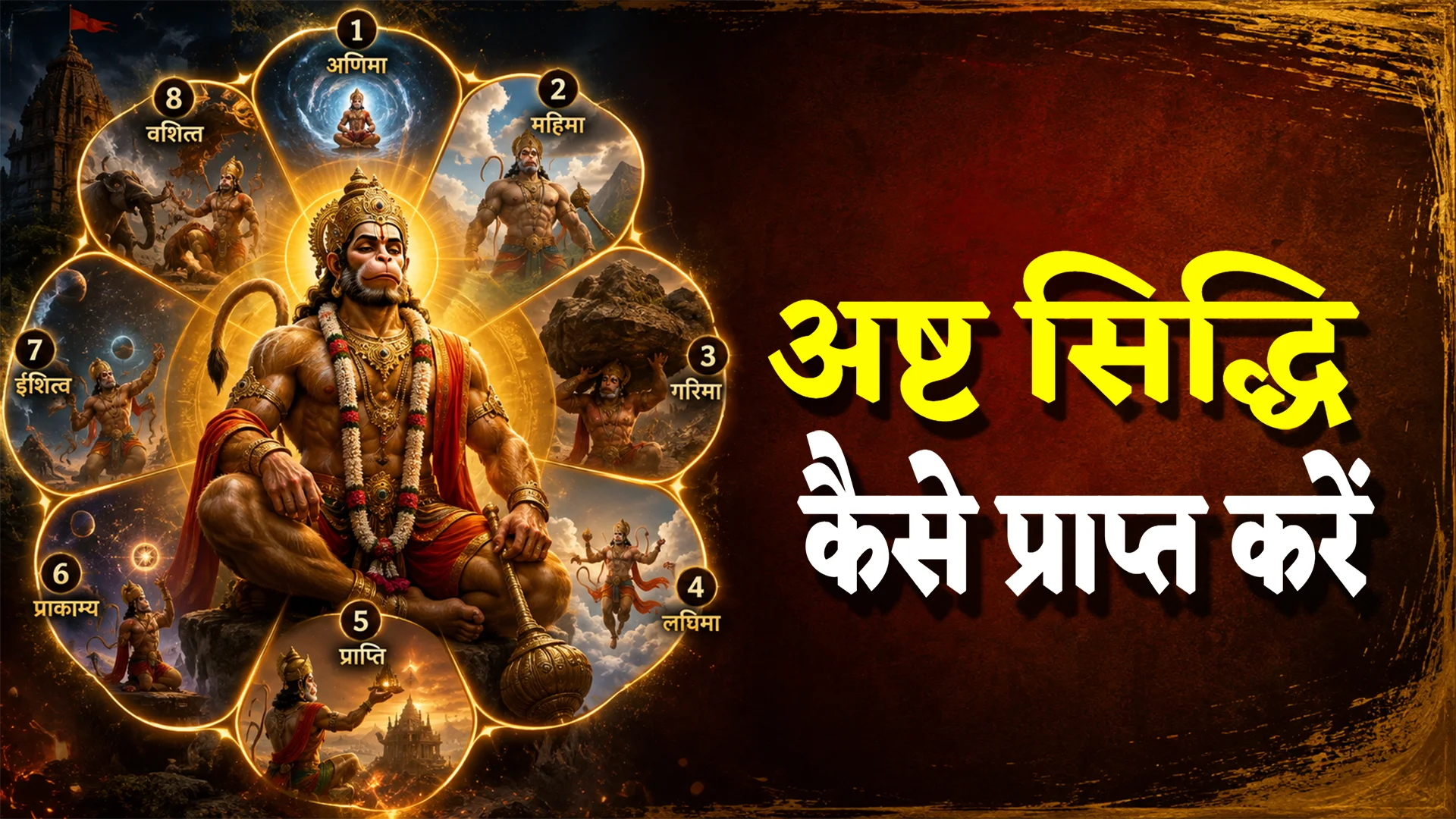

Ashta Siddhi means the Eight Siddhis (spiritual or supernatural powers) described in Hindu and yogic traditions:
- Anima – The ability to become extremely small.
- Mahima – The ability to become extremely large.
- Garima – The ability to become extraordinarily heavy.
- Laghima – The ability to become extremely light.
- Prapti – The ability to attain or reach anything desired.
- Prakamya – The power to fulfill one’s desires or intentions.
- Ishitva – The power of mastery or lordship.
- Vashitva – The power to control or influence.
These are traditionally associated with advanced yoga, meditation, devotion, and spiritual practice, especially in traditions connected with Lord Hanuman.
क्या अष्ट सिद्धि वास्तव में प्राप्त की जा सकती हैं? हिंदू आध्यात्मिक परंपरा में अणिमा, महिमा, गरिमा, लघिमा, प्राप्ति, प्राकाम्य, ईशित्व और वशित्व को आठ प्रमुख सिद्धियाँ माना गया है। इस वीडियो में जानिए अष्ट सिद्धि क्या हैं, इनका आध्यात्मिक अर्थ क्या है और हनुमान जी की भक्ति एवं साधना से इनका क्या संबंध माना जाता है।
इस वीडियो में हम चर्चा करेंगे:
🔱 अष्ट सिद्धि का रहस्य
🙏 हनुमान जी और अष्ट सिद्धि का संबंध
📿 मंत्र जाप और साधना का महत्व
🕉️ संयम, ध्यान और भक्ति की भूमिका
🔥 गुरु मार्गदर्शन और साधना में अनुशासन
✨ सिद्धियों को लक्ष्य बनाने के बजाय आध्यात्मिक उन्नति का महत्व
“अष्ट सिद्धि नौ निधि के दाता, अस बर दीन जानकी माता।”
हनुमान जी की साधना में श्रद्धा, अनुशासन, सेवा, संयम और समर्पण को विशेष महत्व दिया जाता है। यह वीडियो धार्मिक एवं आध्यात्मिक जानकारी के उद्देश्य से प्रस्तुत है।
Ashta Siddhi Mantra – Sacred Mantra for Spiritual Growth, Devotion & Inner Strength
The Ashta Siddhi Mantra is a sacred spiritual mantra associated with the eight traditional siddhis described in Hindu yogic and spiritual traditions. These eight siddhis are Anima, Mahima, Garima, Laghima, Prapti, Prakamya, Ishitva, and Vashitva. The practice is traditionally connected with deep devotion, meditation, discipline, and the grace of Lord Hanuman.
Regular mantra chanting and devotional practice are believed within the tradition to support inner strength, concentration, spiritual awareness, self-discipline, confidence, and devotion. Rather than treating siddhis merely as supernatural abilities, spiritual traditions often emphasize that sincere sadhana should lead toward greater self-control, wisdom, humility, and connection with the Divine.
Ashta Siddhi Mantra Benefits
The Ashta Siddhi Mantra is traditionally used as part of spiritual and devotional practices for:
- Enhancing concentration and meditation
- Developing inner strength and confidence
- Supporting spiritual discipline and awareness
- Deepening devotion toward Lord Hanuman
- Encouraging mental focus and self-control
- Supporting a disciplined meditation routine
- Cultivating courage, determination, and perseverance
- Connecting with the traditional symbolism of the eight siddhis
The Eight Siddhis
1. Anima Siddhi – Traditionally described as the ability to become extremely subtle or small.
2. Mahima Siddhi – Traditionally associated with becoming immensely large or expanded.
3. Garima Siddhi – Traditionally described as the ability to become extraordinarily heavy.
4. Laghima Siddhi – Traditionally associated with becoming extremely light.
5. Prapti Siddhi – Traditionally described as the ability to attain or reach what is sought.
6. Prakamya Siddhi – Traditionally associated with the fulfillment of one’s intentions or desires.
7. Ishitva Siddhi – Traditionally described as mastery or lordship.
8. Vashitva Siddhi – Traditionally associated with mastery or control over oneself and one’s surroundings.
Spiritual Significance
The Ashta Siddhi tradition is deeply connected with the broader concepts of Yoga, Dhyana, Mantra Sadhana, Bhakti, and spiritual discipline. In Hanuman devotional traditions, the famous line “Ashta Siddhi Nava Nidhi Ke Data” describes Hanuman Ji as the giver of the eight siddhis and nine treasures.
This mantra may be incorporated into a personal devotional routine with faith, sincerity, discipline, and respect for traditional practices.
Important Note
The Ashta Siddhis are part of Hindu spiritual and religious traditions and should be understood in that context. Mantra practice is a form of spiritual and devotional practice and should not be considered a scientifically proven method for acquiring supernatural abilities.


